Zero-Waste Travel Packing Checklist (Carry-On Ready)

Eco-Friendly Traveler Checklist: A Practical Zero-Waste Packing Guide
Packing lighter and producing less waste often comes down to a few smart swaps and a repeatable routine. A well-built zero-waste travel kit helps handle the most common “trash moments” on the road—airport snacks, takeout meals, hotel toiletries, and laundry—without making travel feel restrictive. Use the checklist below to streamline your carry-on, cut down on single-use plastics, and stay flexible no matter where you’re headed.
What Makes a Trip More Sustainable (Without Overcomplicating It)
- Prioritize reusables that replace common single-use items (bottles, bags, utensils, wipes).
- Pack with “refill and repeat” in mind: choose containers and products you can top up locally rather than replace.
- Choose multipurpose gear to reduce overall volume (a scarf that doubles as a blanket, a bar that works for body and hair).
- Plan for waste points before they happen: airport food, takeout containers, hotel minis, and laundry on the go.
Small choices stack up. For a practical framework on waste reduction, the U.S. Environmental Protection Agency’s overview of Reduce, Reuse, Recycle is a helpful reminder: prevention and reuse come first, recycling comes later.
The Core Eco-Friendly Traveler Checklist (Carry-On Friendly)
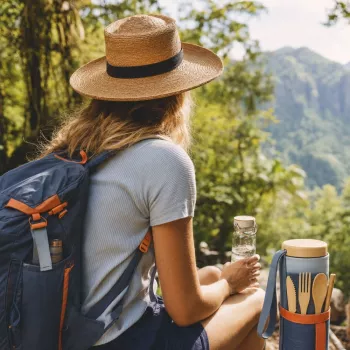
- Hydration: reusable water bottle; optional collapsible bottle for day trips; cleaning tablets or a small brush if needed.
- Food on the go: foldable tote; reusable cutlery; compact container or snack pouch; reusable straw if preferred.
- Personal care: solid shampoo/conditioner or refillable minis; bar soap in a ventilated case; bamboo or reusable razor; deodorant with refillable/low-waste packaging.
- Dental: toothbrush with replaceable head or bamboo handle; toothpaste tabs or refillable paste; floss in minimal packaging.
- Skin and sun: reef-safer sunscreen where appropriate; moisturizer in a refillable container; lip balm in paper/metal tube when possible.
- Laundry: small stain stick or laundry sheets; sink stopper (optional); travel clothesline; quick-dry towel to reduce hotel laundry demand.
- Periods and hygiene: reusable pads/underwear or menstrual cup; compact wet bag; unscented, minimal-waste backups if needed.
- Electronics: rechargeable batteries; universal charger; power bank; cable organizer to prevent replacements from breakage.
- Safety and health: refillable hand sanitizer; small first-aid kit; required meds; masks if needed for air quality or illness prevention.
- Paperless essentials: digital copies of reservations/IDs (where legal); offline maps; reusable notebook if writing by hand is preferred.
Zero-Waste Packing Swaps: What to Replace and What to Pack
| Common single-use item | Low-waste swap | Packing tip |
|---|---|---|
| Plastic water bottles | Reusable bottle | Bring empty through security; fill after |
| Disposable shopping bags | Foldable tote | Keep one in your day bag at all times |
| Takeout cutlery | Reusable utensil set | Choose a lightweight, washable set |
| Mini shampoo bottles | Solid bars or refillable minis | Use a ventilated case to avoid soggy bars |
| Paper towels/napkins | Reusable cloth | Pack 1–2 quick-dry cloths in a zip pouch |
| Single-use wet wipes | Washable cloths | If wipes are needed, pick compostable and pack out |
Toiletry and Liquids Strategy for Low Waste and Easy Security
- Shift to solids first: soap, shampoo bars, conditioner bars, and lotion bars reduce plastic and help you stay within liquid limits.
- Use a compact refill kit: bring 2–3 labeled refillable bottles for items that must be liquid (face wash, contact solution, sunscreen).
- Prevent spills and waste: decant only what you’ll use; choose leakproof containers; double-bag liquids for transit days.
- Refill on arrival: for longer stays, look for local refill shops, pharmacies, or bulk options; keep containers clean so they last trip after trip.
- Avoid hotel minis: decline daily restocks when possible; use “do not disturb” or a quick note to reduce automatic replacements.
Tourism has real environmental impact, but practical traveler choices matter—especially around consumption and waste. For broader context, see the UN Environment Programme’s overview of tourism and the environment.
Low-Impact Habits During Transit (Airports, Road Trips, Trains)
- Carry a “no-trash kit”: bottle, tote, utensils, snack container, and a small cloth—stored together for fast access.
- Bring snacks to reduce packaged impulse buys; choose bulk-friendly options when possible.
- Decline extras: napkins, plastic cutlery, condiment packets, and unnecessary receipts.
- Use refill stations and refill-friendly cafés; ask for drinks “no lid, no straw” when appropriate.
- Pack out what can’t be recycled locally with a spare zip bag for wrappers and paper scraps.
Stays and Day Trips: Keep the Routine Simple
Printable-Style Digital Checklist: How to Use It Before Every Trip
Recommended Digital Download
If a quick-reference list makes packing easier, the Eco-Friendly Traveler Checklist (digital download) is designed for carry-on routines, weekend trips, and longer travel where refilling and reusing matter most. Keep it on your phone or print it for a suitcase-pocket reminder.
Traveling with an animal companion? Pair it with the Pet Travel Essentials Checklist for Safe Trips so you’re prepared without last-minute, waste-heavy purchases.
For travelers who want a broader “feel good on the road” routine (sleep, movement, and basics that support consistency), consider Whole You: Holistic Wellness Guide as a simple, portable reference.
FAQ
What is an eco-friendly traveler?
An eco-friendly traveler reduces waste and environmental impact by using reusables, packing efficiently, refilling when possible, and making mindful choices during transit and accommodations. It’s less about perfection and more about small habits you can repeat on every trip.
What are the top three zero-waste items to pack first?
A reusable water bottle, a foldable tote, and a compact utensil/snack container kit cover many of the most common single-use situations. Together, they help you skip plastic bottles, bags, and takeout cutlery while making food on the go easier.









Leave a comment